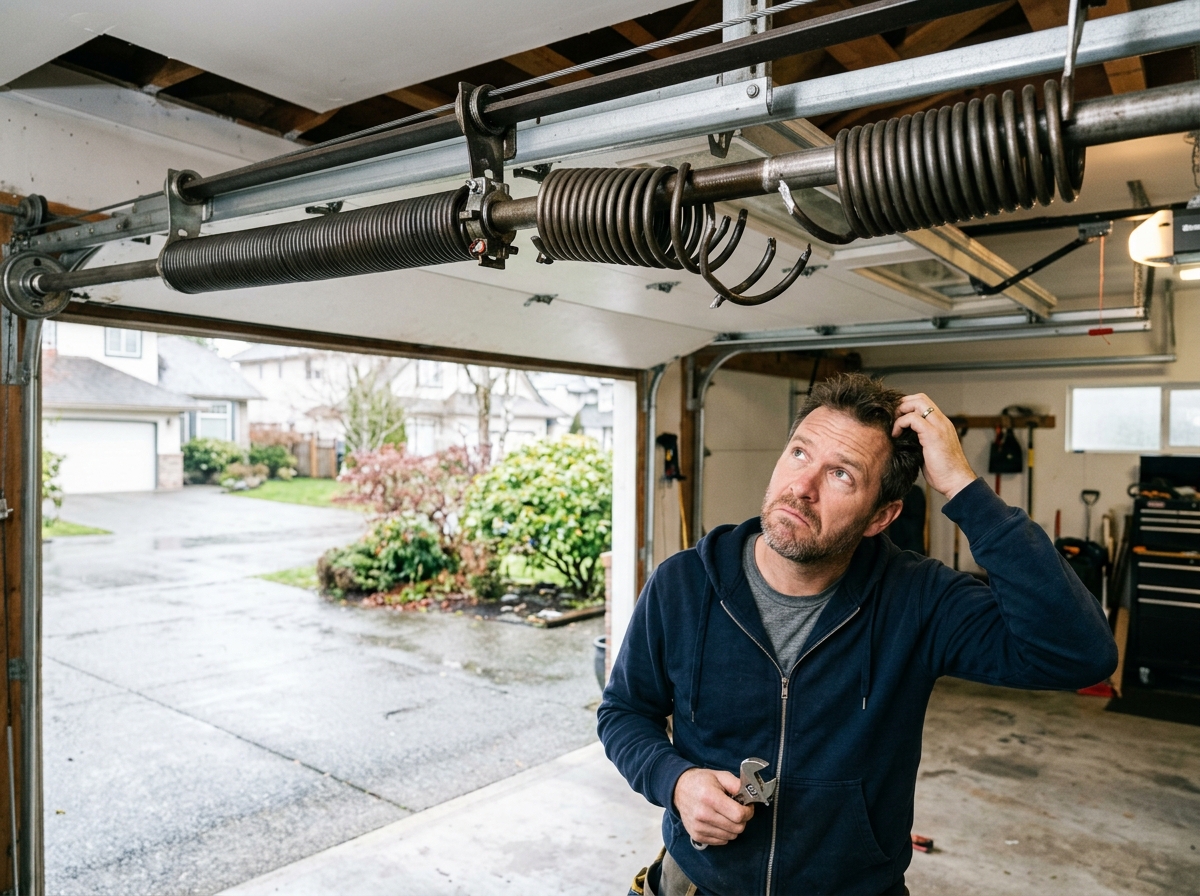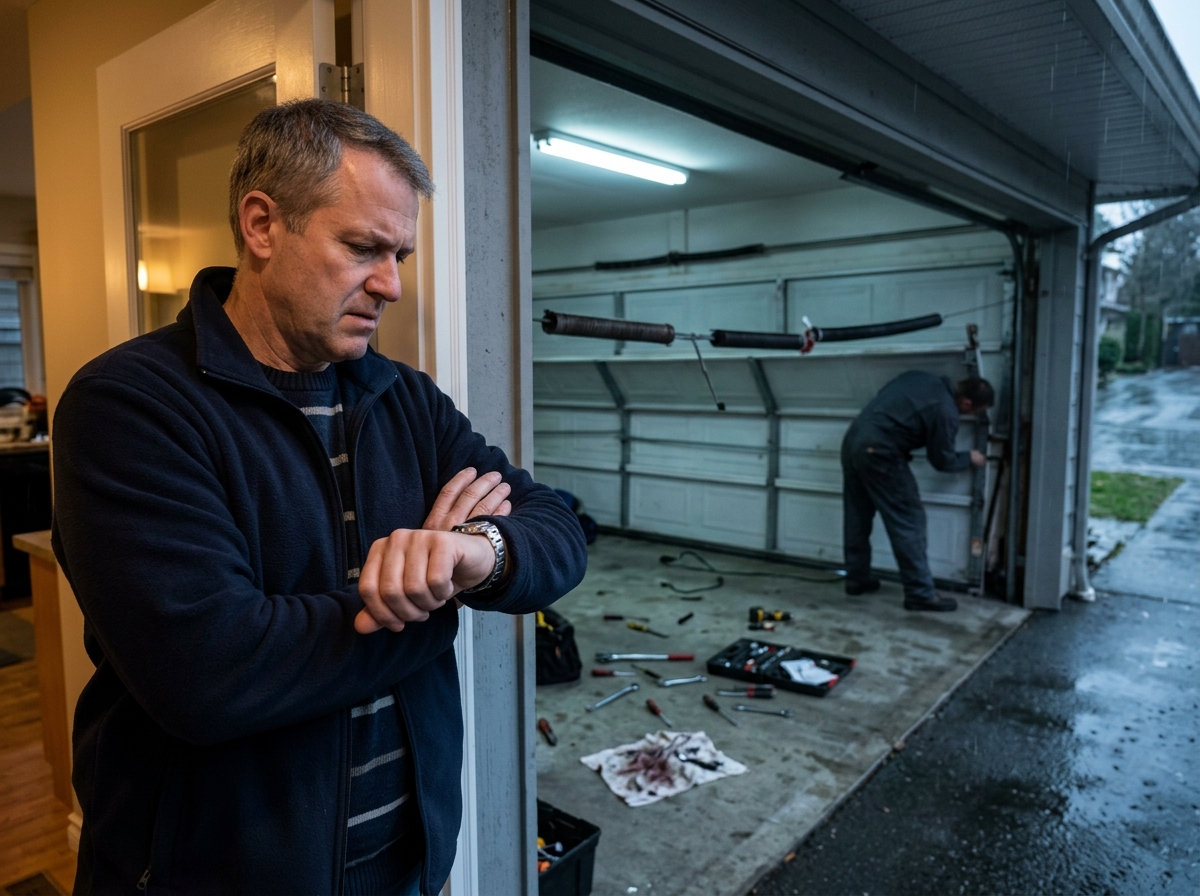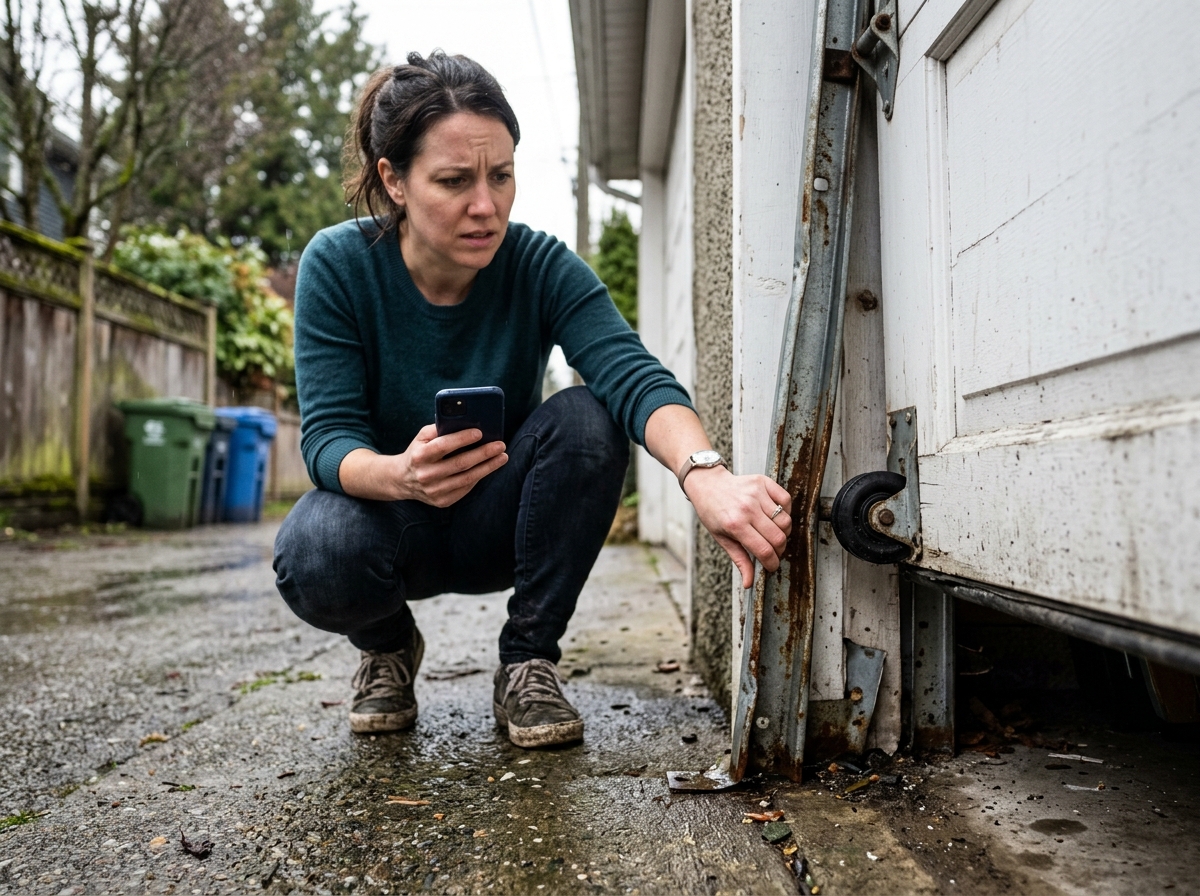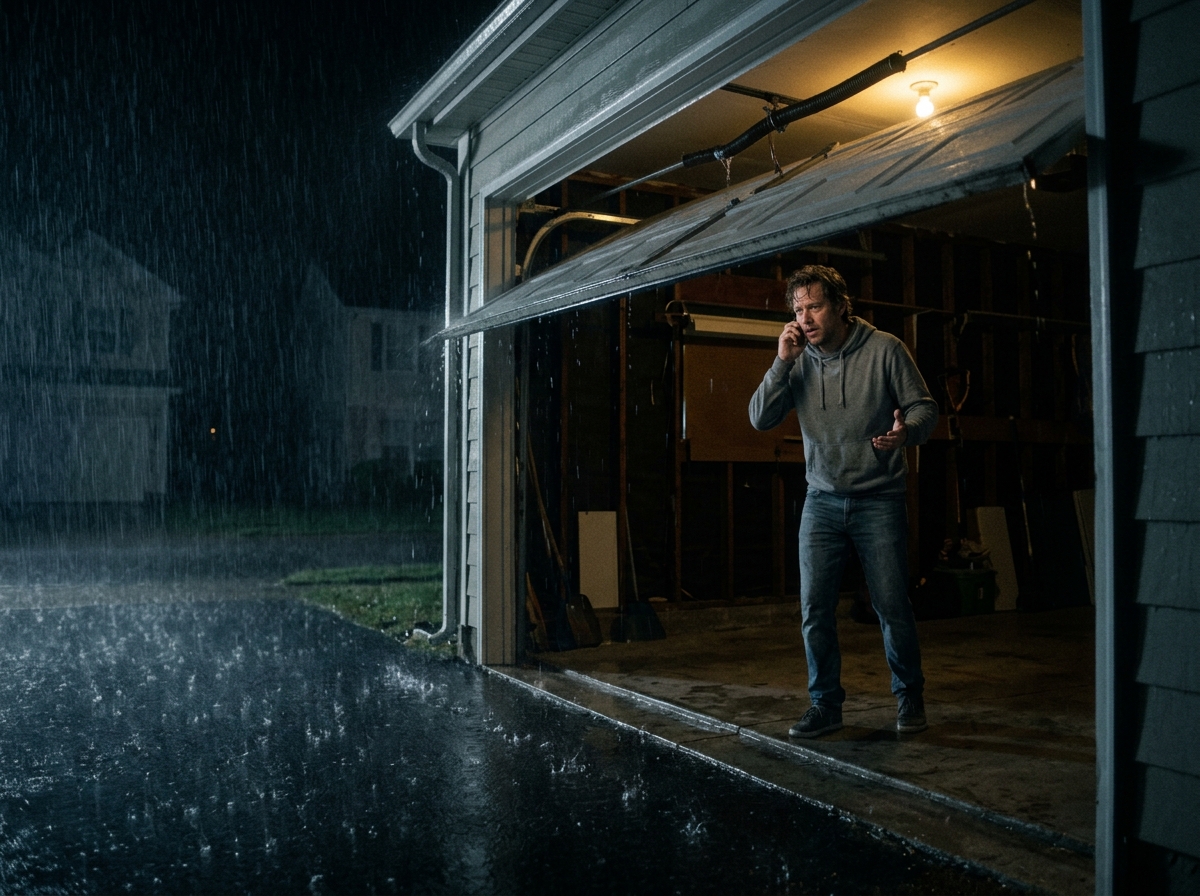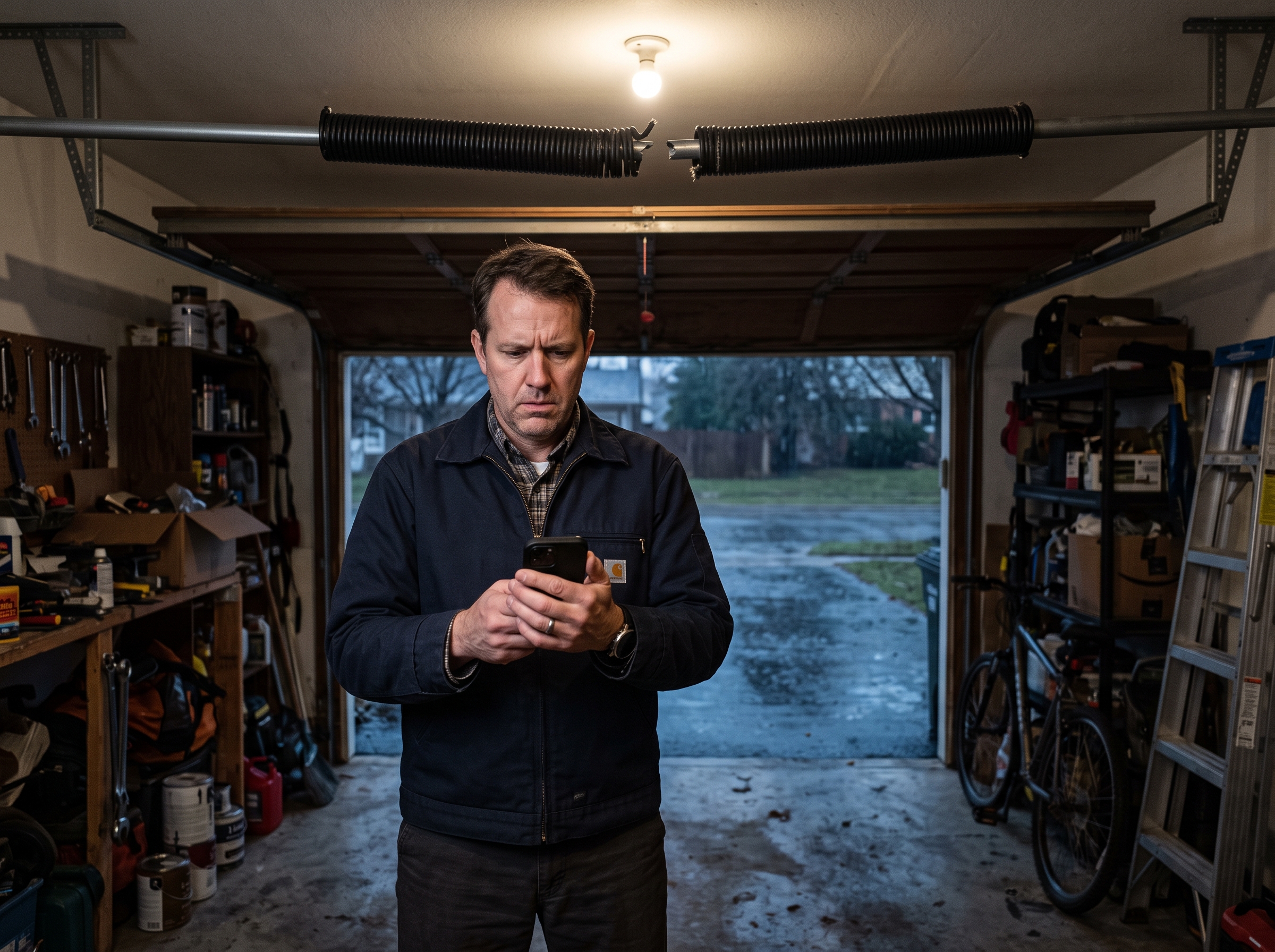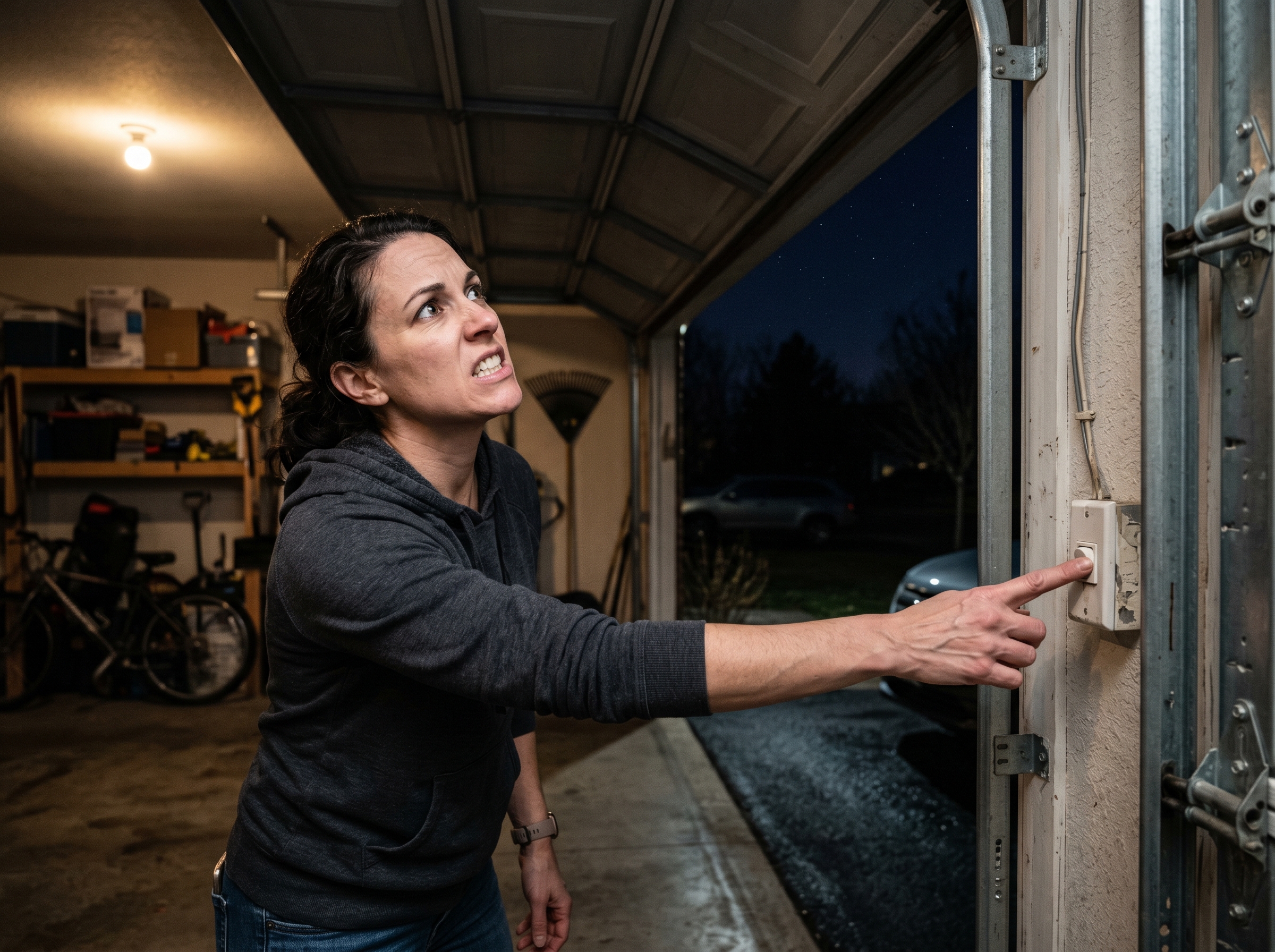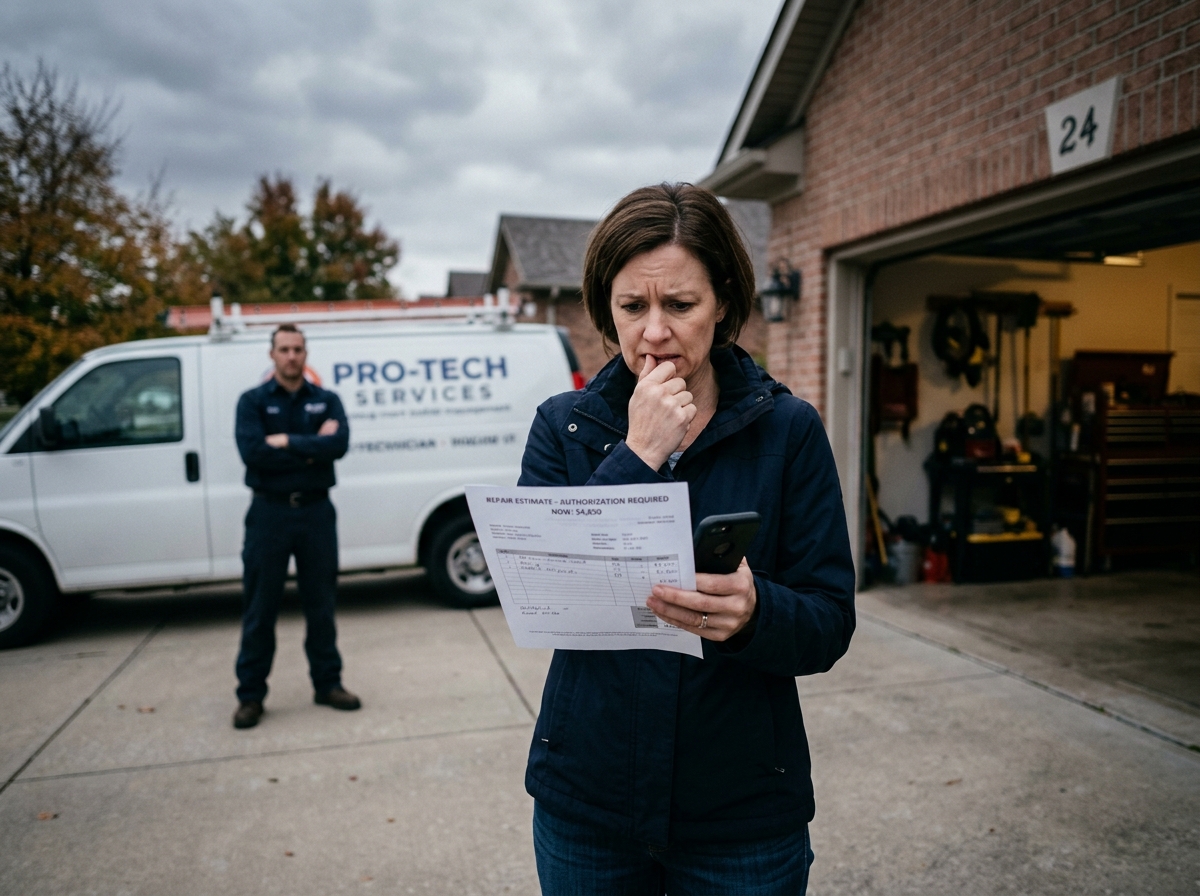
A broken garage door is stressful. An estimate can feel worse when the price grows fast or the reason is not clear. Before you approve residential garage door repair in Vancouver, compare the written scope with this garage door repair quote guide and ask what each added part fixes.
Quick overview
- The estimate jumps from one repair to a full rebuild with little testing.
- You are pushed to approve extra parts before you see why they are worn.
- The price is bundled, so you cannot tell what labor, parts, or fees cost.
- New charges appear after work starts without clear approval.
In this guide
- A clear estimate names the problem, the fix, and the price before work starts.
- A good explanation should connect every recommended part to a visible or tested issue.
Simple version: do not approve extra work until these four things are clear.
- What failed.
- What must be replaced now.
- What can wait.
- What the total price includes.
TL;DR: Four estimate red flags
- Red flag 1: a full replacement is pushed before the door is properly checked.
- Red flag 2: extra parts are added without showing wear, test results, or a clear reason.
- Red flags 3 and 4: bundled pricing hides the breakdown, or the price changes without your approval.
What counts as an upsell red flag?
An upsell red flag is not simply an expensive repair. It is a sign that you need more information before saying yes. This matters most when the door is stuck and you feel rushed to approve emergency garage door repair on the spot.
Context (what matters in this situation):
- Red flag: the technician skips basic checks and jumps to the biggest repair.
- Red flag: the reason for a new part stays vague, such as saying it is just better to do everything.
- Red flag: you cannot see an itemized price or compare repair choices.
- Red flag: you are told the price is only valid if you decide right now.
What a fair estimate conversation should sound like
A useful estimate should slow the decision down, not speed it up. Before approval, check the common items in this garage door repair fee checklist so the total is easier to compare.
What this usually looks like (real-world flow):
- First, the technician checks the door, opener, springs, cables, tracks, rollers, and safety parts that relate to the symptom.
- Next, the technician explains the main failure in plain words.
- If another part is recommended, you are shown the wear, damage, or test result.
- You get the added price before that extra work starts.
- You choose what to approve after the scope and total are clear.
Details to confirm (so you get the right help fast):
- Ask which repair is required to make the door work safely.
- Ask which repairs are preventive and can be scheduled later.
- Ask whether the estimate includes labor, parts, service fees, disposal, and tax.
What you should get as the outcome:
- You can compare the real scope instead of comparing one total number.
- You can spot optional upgrades without confusing them with required repairs.
- You reduce the chance of a surprise total at the end.
Where hidden add-ons can appear
Some added work is real, especially when damage is found during inspection. The key is whether the estimate explains it. For example, a bent or cracked section may justify garage door panel replacement, but that should be tied to the actual condition of the panel.
Limits / constraints (what can slow things down):
- Diagnostic or service-call fee: ask whether it is separate or credited toward the repair.
- After-hours fee: ask whether evening, weekend, or urgent service changes the rate.
- Warranty limit: ask what parts and labor are covered and for how long.
- Return-visit limit: ask whether a second trip for an ordered part has another charge.
Hidden costs to watch for:
- Hardware bundle: ask which pieces in the bundle are actually worn.
- Upgrade charge: ask whether a higher-cycle or premium part is optional.
- Disposal charge: ask if old-part removal is included in the total.
- Extra labor: ask what changed from the original scope before approving it.
What to do before you approve the estimate
Ask the technician to separate the main repair from optional work. If the problem involves a bent track or a door that will not move smoothly, ask what inspection supports garage door track repair before approving more parts.
- Get the final scope and total in writing, including added work.
- If something is unclear, ask the technician to show the failed or worn part before you approve it.
Our recommendations before garage door cable repair or other added work
Ask for the reason each added part is needed.
Ask to see wear, damage, or a failed test when possible.
Separate required repairs from preventive upgrades.
Get added prices before the technician does added work.
Keep a copy of the written estimate and final invoice.
If the door can be left safely closed, compare another estimate when the scope still feels unclear.
Safety first while you review the estimate
Do not turn an estimate check into a do-it-yourself repair. Parts used in garage door spring repair can store high force, so keep hands and tools away from springs, cables, and moving hardware.
A good option is:
- Keep people, pets, and vehicles away from a door that may move or fall.
- Do not loosen spring, cable, drum, or bottom-bracket hardware.
- Do not keep running the opener if the door is jammed, crooked, or unusually heavy.
- If the door is secure, leave it closed until the repair scope is clear.
- Ask the technician to explain the safety reason for any urgent added repair.
Scenario 1: One spring broke and both are recommended
Replacing both springs is not automatically an upsell. Ask whether the springs are a matched pair, the same age, and similarly worn. This guide on whether to repair one spring or replace both can help you frame the questions.
Do this:
- Ask for the price to replace one spring and the price to replace the pair.
- Ask about spring type, cycle rating, and warranty.
- Ask how the technician will check door balance after the repair.
Scenario 2: The opener is blamed before the door is checked
A weak or noisy opener can be part of the problem, but the door itself should also be checked. Before approving garage door opener repair, ask whether the door moves freely by hand when it is safe for the technician to test it.
We recommend this:
- Ask what opener test failed.
- Ask whether springs, tracks, rollers, or door balance are adding strain.
- Ask whether repair, adjustment, or replacement is being recommended and why.
Scenario 3: Many worn hardware parts are added at once
Older doors can have more than one worn part, but each added item should have a reason. If garage door roller replacement is added, ask which rollers are worn and whether all rollers need replacement now.
Here’s a simple path forward:
- Ask the technician to point out loose, cracked, seized, or noisy hardware.
- Ask which items affect safe operation today.
- Ask which items are preventive and can wait.
Suggested plan:
Step 1: Get the problem and scope in writing
Describe the main symptom and ask what the technician plans to inspect. If worn hinges are part of the estimate, ask what supports garage door hinge replacement and whether it is required now.
Step 2: Share access details before dispatch
Tell the company if the garage is inside a parkade, behind a gate, or hard to access. Share the door size, main symptom, and whether a vehicle is trapped so the visit starts with better information.
Step 3: Compare the repair options before approval
Ask the technician to separate the required fix from upgrades. When a spring system is involved, confirm why torsion spring replacement is recommended and what is included in that price.
Government of Canada home renovation quote guide
The Government of Canada home renovation guide explains what to compare in contractor quotes. It recommends reviewing costs such as labor, extra charges, taxes, the project scope, and a cost breakdown. Those checks can help you ask better questions before approving garage door work. It is general contractor guidance, not garage-door-specific advice.
Garage door repair estimate FAQs
Is recommending two new springs always an upsell?
No. A matched pair may have similar age and wear, so replacing both can be a reasonable option. Ask for the reason, the one-spring price, the two-spring price, and the warranty before deciding.
Should a garage door repair estimate list parts and labor?
A clear estimate should make the scope and total easy to understand. Ask what parts are included, what labor covers, and which fees are separate. If the price is bundled, ask for enough detail to compare the work.
What should I do if the price changes after work starts?
Ask the technician to stop before doing the added work. Get the new reason, added parts, added labor, and new total in writing. Approve the change only after you understand it.
Is a higher-cycle spring an upsell?
Not always. A higher-cycle spring can be an upgrade with a different expected service life and price. Ask for the cycle rating, warranty, and the standard option so you can compare.
Can a sensor problem look like a bigger garage door problem?
Yes. A sensor issue can stop or reverse the door even when the main door hardware is still usable. Ask whether garage door sensor repair was tested before larger parts are recommended.
Does damaged weather stripping mean I need a bigger repair?
Usually, worn sealing material is a separate issue from major door hardware. If you see gaps, torn rubber, or air and water getting in, ask whether weather sealing is the only problem or whether other damage is present.